A logistics booking contains more context than a price. The business needs to know what service was requested and which booking a payment belongs to. The customer needs a clear way to complete that payment.
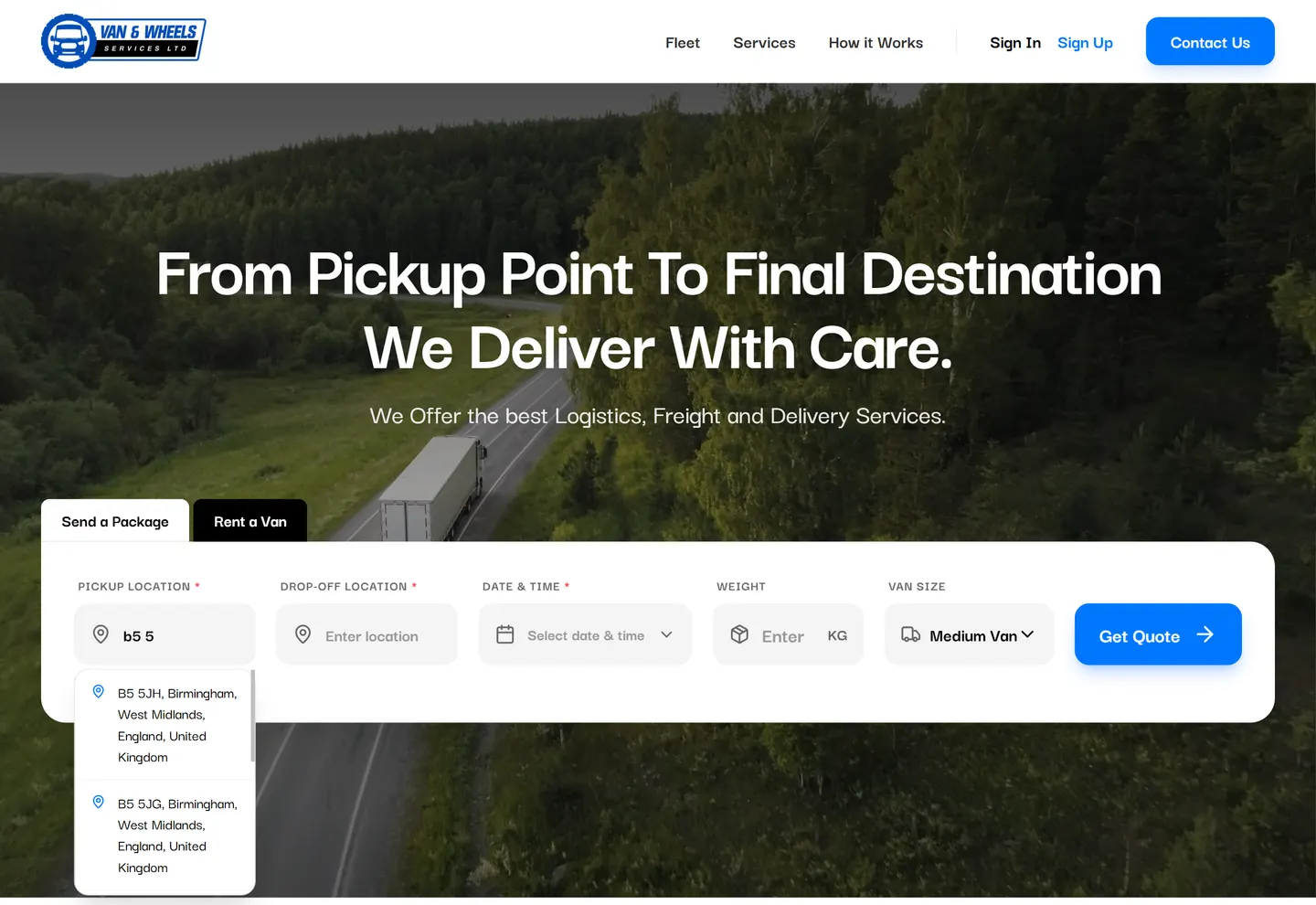
For Van & Wheels, a UK logistics and van-hire business, my Stripe work covered checkout, booking payments and refunds. The wider project includes a customer-facing booking platform and an internal operations dashboard.
Think about the handoff before the payment screen
The booking flow deals with logistics details such as pickup, drop-off, van size and timing. Payment needs to fit into that service journey. A successful checkout experience should leave the business able to connect the money with the work it needs to carry out.
My Stripe work covered checkout, booking payments and refunds. The case study shows the customer-facing product that those payment interactions support.
Booking status and payment status answer different questions
A booking can describe a requested service. A payment status describes what is known about the money. Treating them as separate concepts makes it easier to ask useful operational questions: is the job still requested, has payment completed, or does the team need to follow up?
The connection between those concepts is where backend API work becomes visible to the business. A checkout screen on its own does not explain how an operator identifies the associated booking afterwards.
The completion screen is not the whole confirmation strategy
For a Stripe Checkout integration, Stripe recommends handling payment fulfillment through server-side events rather than relying only on the customer reaching a success page. Its documentation also covers delayed payment methods. That guidance is useful when reviewing how a booking system learns that a payment has completed.
A practical review checklist
- Can the business identify which booking a payment belongs to?
- Does the interface distinguish a requested booking from a paid booking?
- What does the customer see if they leave checkout before completing payment?
- How will staff investigate a payment that needs attention?
- Is the refund workflow connected to the original transaction and the booking context?
Use those questions to review the customer journey and the staff handoff together. The confirmation should help both people understand what happened to the booking and to the money.
The workflow continues after checkout
Refunds were also part of my work on Van & Wheels. That adds another state transition to the payment lifecycle and another operational question: what should the team see when money needs to be returned?
This is why I describe the project as booking payment integration. It connects a customer-facing interaction with a business process, and it gives me a concrete payment workflow to discuss alongside the frontend work.